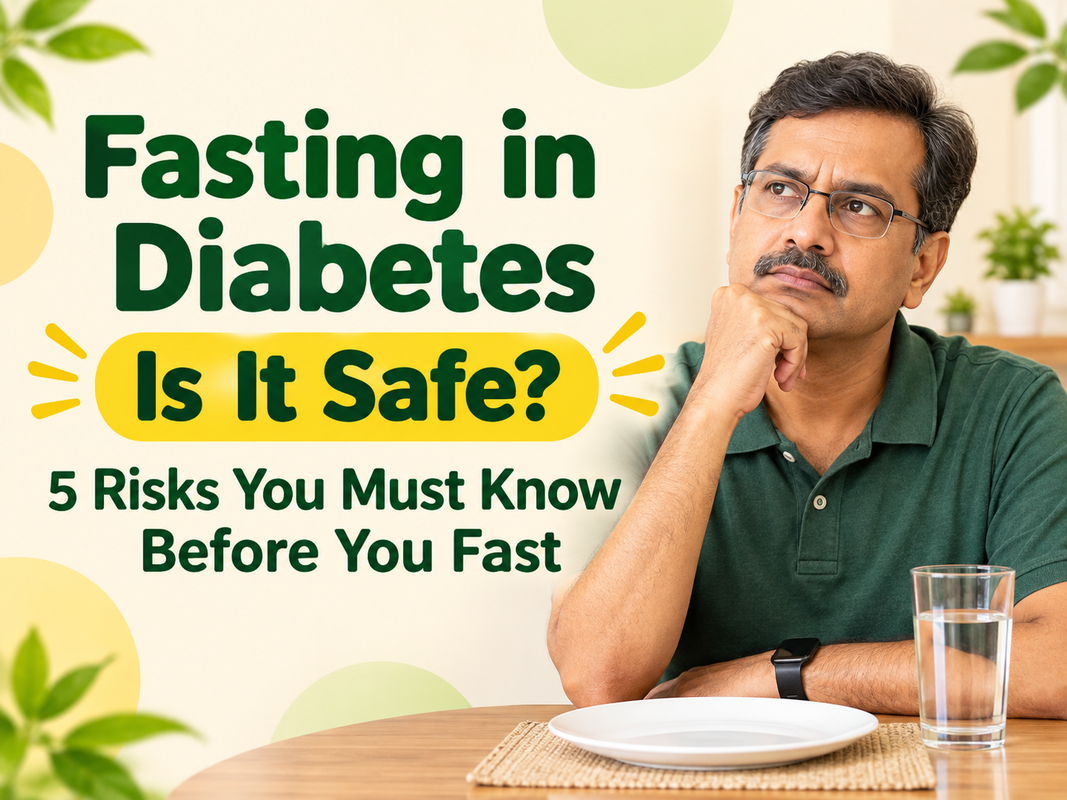
Fasting is a part of life for many people. Some fast for religious reasons, during Navratri, Ramadan, Karwa Chauth, or Janmashtami. Others follow intermittent fasting as a lifestyle routine. For most people, fasting is safe. But for people with diabetes, fasting without a plan can be dangerous. When you stop eating, your blood sugar does not simply stay still. It can fall too low, or it can spike dangerously high, and both can become emergencies.
The American Diabetes Association has clear guidance on fasting with diabetes, and this guide follows it. It explains the five critical risks of fasting, what the warning signs look like, how to plan a fast safely with your doctor, and how to break your fast without a dangerous sugar spike. Fasting is possible with diabetes, but only with the right knowledge and medical supervision.
What Happens in Your Body When You Fast
When you fast, your body changes its fuel source. In a person without diabetes, blood sugar stays fairly stable during a fast, because insulin and other hormones adjust smoothly. In a person with diabetes, that balance is fragile. Medicines and insulin keep working even when no food is coming in, and the liver can release stored glucose at the wrong time. That is why sugar can swing in both directions during a fast, too low or too high, sometimes within the same day.
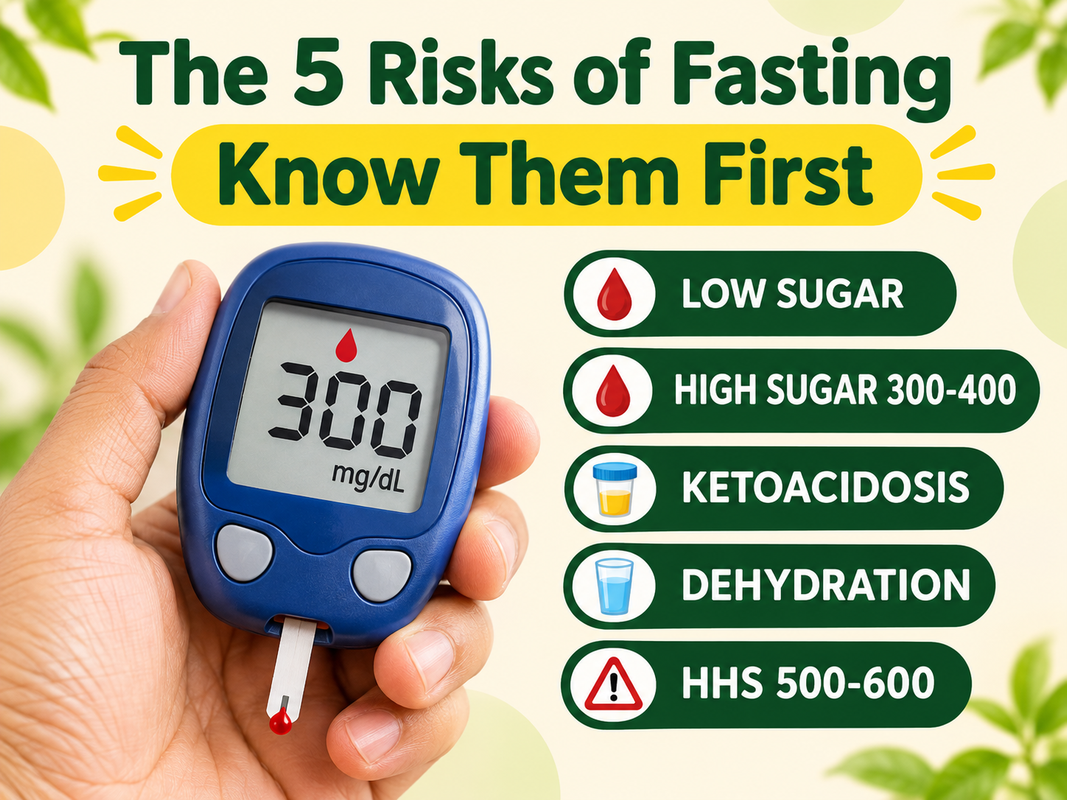
The 5 Risks of Fasting with Diabetes
| Risk | What Happens | Why It Is Dangerous |
|---|---|---|
| 1. Hypoglycemia (low sugar) | Sugar falls rapidly when medicines or insulin keep working without food | Can become life-threatening within minutes |
| 2. Hyperglycemia (severe high sugar) | Liver releases stored glucose; sugar spikes to 300-400 mg/dL | Damages organs and worsens control |
| 3. Ketoacidosis and blood acid shifts | Low insulin forces rapid fat burning; acidic ketones enter the blood | Blood becomes acidic; a medical emergency |
| 4. Dehydration | Water-free fasts strain the kidneys and thicken the blood | Glucose concentrates; kidneys suffer |
| 5. Hyperosmolar Hyperglycemic State (HHS) | Extreme dehydration drives sugar to 500-600 mg/dL | Needs immediate hospital admission |
Risk 1: Hypoglycemia, When Sugar Falls Too Low
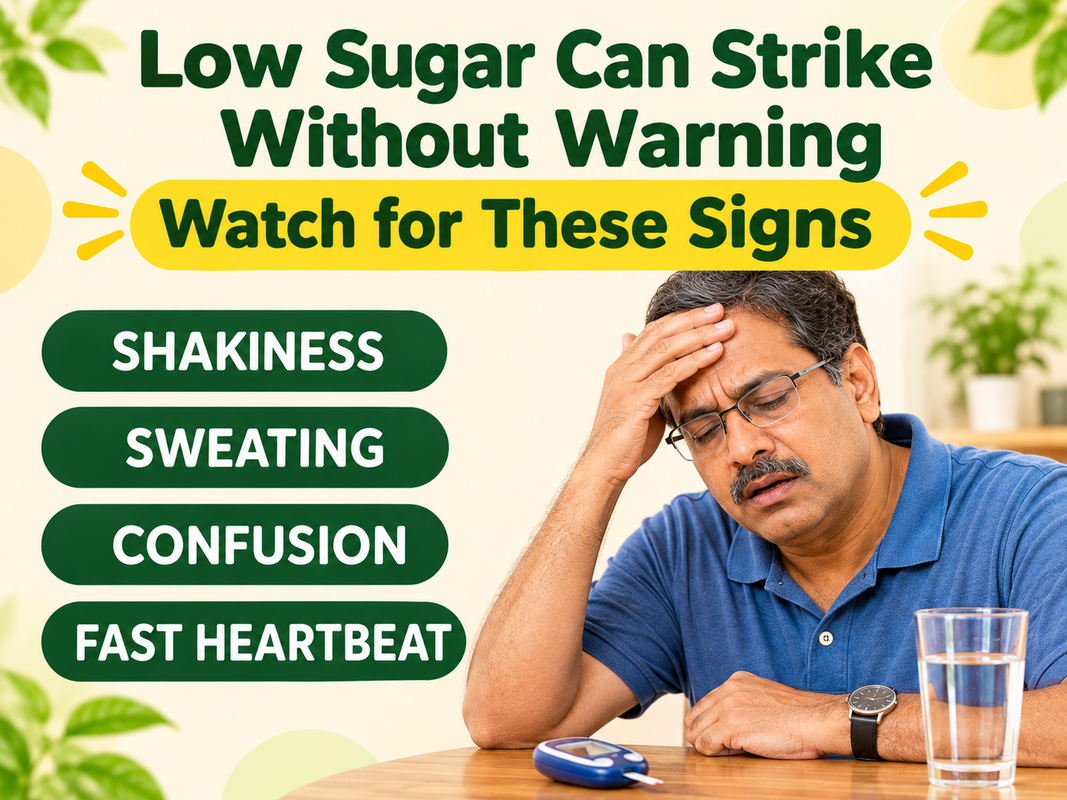
Hypoglycemia is the most immediate risk of fasting. Insulin and insulin-stimulating medicines lower your blood sugar whether you have eaten or not. When you skip meals during a fast, there is no food to balance them, and sugar can fall rapidly. A severe low can be life-threatening, and it can happen without much warning.
The warning signs of low sugar are usually shakiness, sweating, a fast heartbeat, sudden hunger, confusion, and dizziness. If you feel these signs during a fast, check your sugar at once and follow your doctor's advice for treating a low. Never ignore a low, and never drive or work alone when your sugar is falling.
Risk 2: Hyperglycemia, When Sugar Spikes to 300-400 mg/dL
Fasting can also push sugar dangerously high. When you stop your daily routine during a fast, the liver can release stored glucose into the blood through a hormone called glucagon. With no food coming in and medicines possibly missed or changed, there is nothing to hold that glucose back. Sugar can climb to 300-400 mg/dL, far above the safe range.
High sugar over hours strains the kidneys, the eyes, and the blood vessels. It also makes you feel unwell, with thirst, frequent urination, tiredness, and blurred vision. That is why skipping medicines or stopping your routine during a fast is never safe on your own.
Risk 3: Ketoacidosis and Blood Acid Shifts
When background insulin runs low during a fast, the body starts burning fat very fast for energy. That process releases acidic ketone metabolites into the bloodstream, and the blood becomes more acidic. This is called ketoacidosis, and it is a medical emergency.
Ketoacidosis needs hospital care. The warning signs include nausea, vomiting, stomach pain, deep and fast breathing, and a fruity smell on the breath. If these signs appear during a fast, seek medical help at once. This risk is one more reason why fasting with diabetes must always be planned with a doctor.
Risk 4: Dehydration
Many religious fasts do not allow water. Without water, the kidneys have to filter the blood with less fluid, and the blood becomes thicker. Thicker blood means the same amount of glucose is now concentrated in less fluid, so the measured sugar reads higher. At the same time, the kidneys come under strain.
Dehydration also makes you feel weak and dizzy, and it raises the risk of the other complications on this list. If your fast allows water, drink regularly through the fasting window. If your fast does not allow water, speak to your doctor before you begin, because the risk is higher.
Risk 5: Hyperosmolar Hyperglycemic State (HHS), the Most Critical Emergency
The most critical risk is called Hyperosmolar Hyperglycemic State, or HHS. It happens when extreme dehydration drives blood sugar to 500-600 mg/dL. At that level, the blood becomes very concentrated, and the person can become confused, very weak, or unconscious. HHS needs immediate hospital admission.
HHS is rare, but it is the reason fasting must never be taken lightly with diabetes. It develops when high sugar and dehydration feed each other for hours. Frequent sugar testing during a fast is the simplest way to catch the climb early, before it becomes an emergency.
How to Plan a Fast Safely with Diabetes
The good news is that fasting can be planned. Doctors usually switch people to long-acting medicines or insulin plans before a fast, because long-acting support prevents sudden lows during the fasting hours. That switch must happen under a doctor's supervision, never on your own.
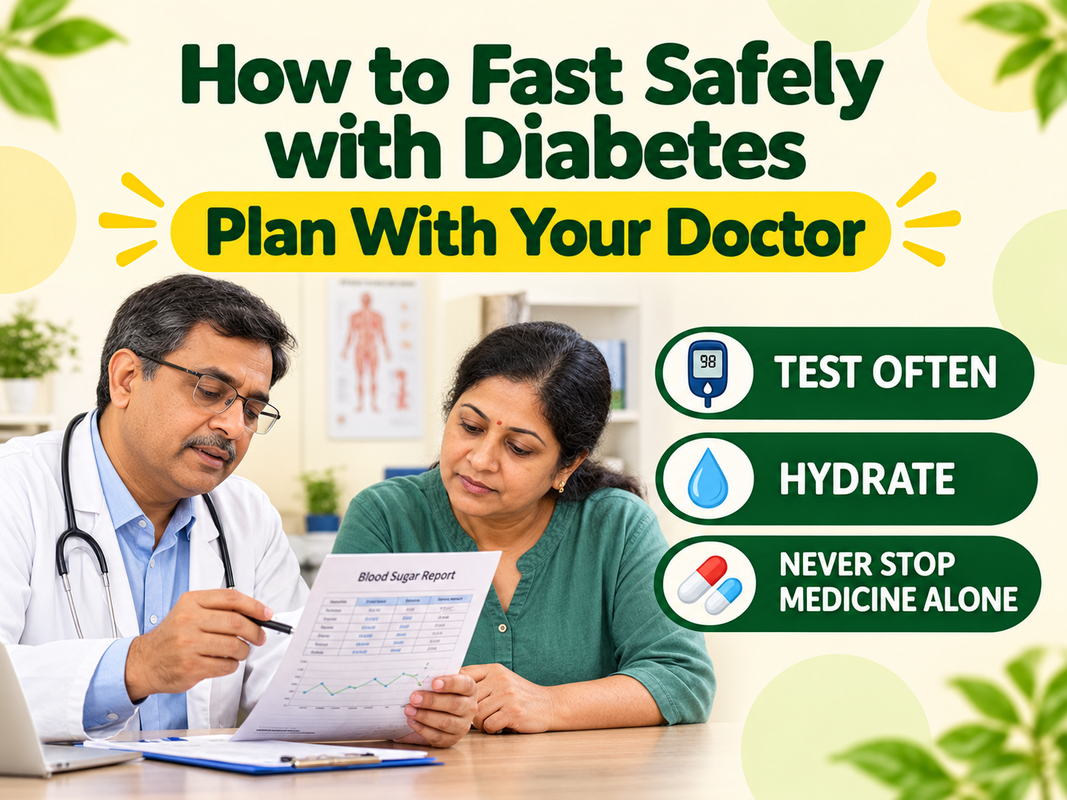
The safety rules are simple. Never stop or change your prescribed medicines on your own before or during a fast. Test your blood sugar frequently through the fasting window, so you catch unexpected highs or lows early. Keep yourself hydrated with mineral-rich fluids, which also help balance the acidity in the blood. And always have a plan for breaking the fast.
Breaking the Fast Safely
How you break a fast matters as much as the fast itself. After a day without food, it is tempting to eat a large, high-carb meal. That is exactly what causes a dangerous post-fast glucose spike. The body, starved all day, absorbs the sugar very fast.
Break your fast gently, with a small low glucose load meal first. Add protein, vegetables, and water before any heavy food. Wait a while, test your sugar, and then eat your main meal. A slow, planned break keeps your sugar steady instead of spiking it.

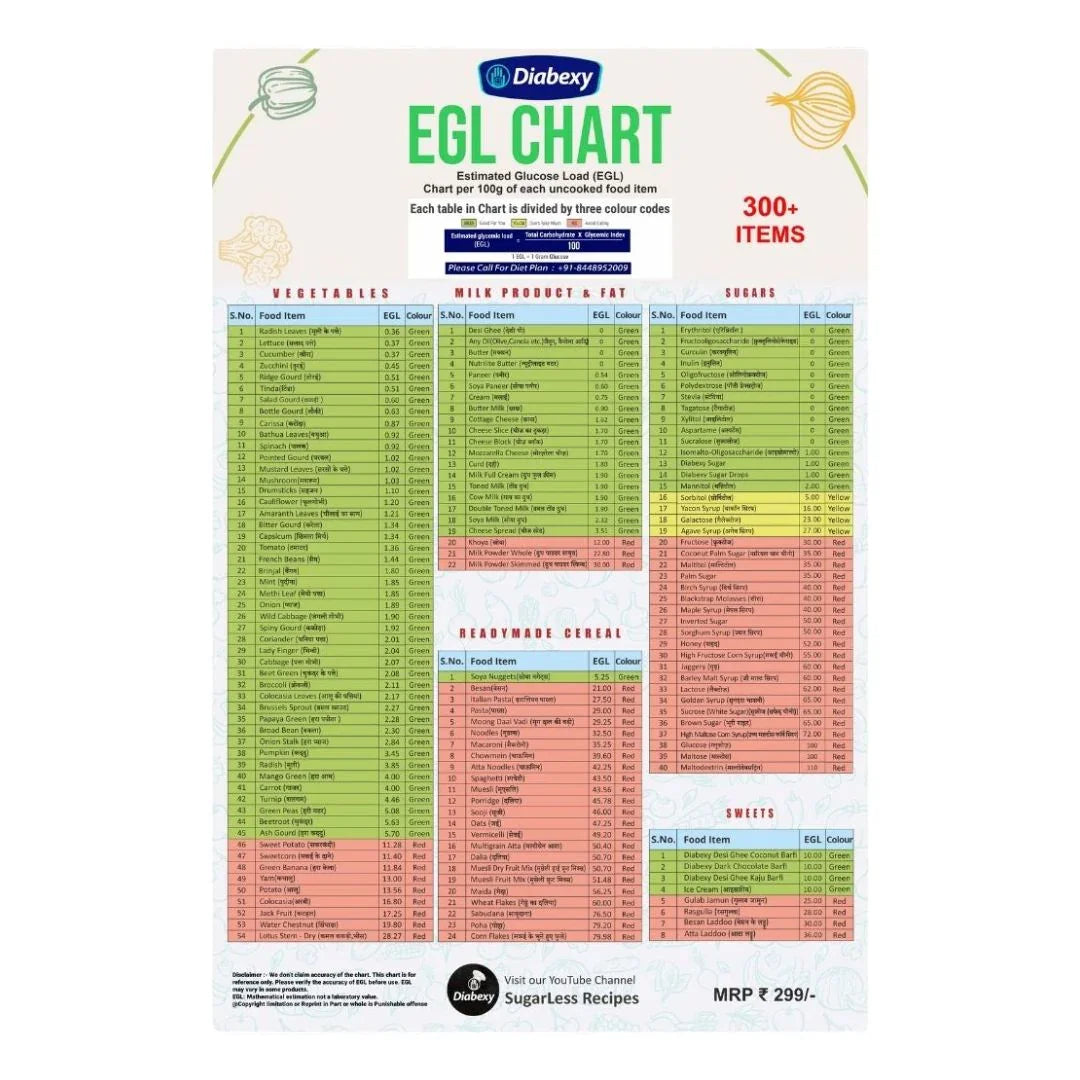
Diabexy EGL Chart
Check the EGL of more than 300 Indian foods before you eat them, and plan your meals with confidence. The chart shows every food in green, yellow, or red, so you always know what is safe for your sugar.
Diabexy Sugar Control Atta
When you break a fast, rotis made with low glucose load atta keep your sugar steadier than rotis made with regular wheat atta. It is India's first atta backed by published clinical evidence, and it fits easily into your daily meals.
Can Diabetics Fast?
Yes, fasting is possible with diabetes, but it depends on knowledge and supervision. Religious fasting and intermittent fasting both need the same care: a doctor's plan, frequent sugar testing, the right medicines, and a safe way to break the fast. Without those, fasting can turn dangerous very fast.
If you fast for religious reasons, or you follow intermittent fasting, talk to your doctor first and get a plan made for you. Your body, your medicines, and your sugar pattern are your own, so your fasting plan should be your own too.
Get a customized fasting plan: WhatsApp "Fasting Plan" to +91 84489 52009, or visit link.diabexy.com/fastingplandes for free guidance and a customized fasting protocol, planned safely without dangerous blood glucose swings.
Frequently Asked Questions
Is fasting safe for people with diabetes?
Yes, with a plan and doctor supervision. Fasting without a plan carries five serious risks: low sugar, severe high sugar, ketoacidosis, dehydration, and HHS. With the right medicines, frequent sugar testing, and a safe way to break the fast, fasting is possible.
Can diabetics fast during Ramadan or Navratri?
Yes, with preparation. Religious fasting needs a doctor's plan, especially for long water-free fasts. For general festival fasting tips, see Diabexy's guide: fasting tips for diabetics.
What is HHS in diabetes?
HHS stands for Hyperosmolar Hyperglycemic State. It is the most critical fasting emergency: extreme dehydration drives blood sugar to 500-600 mg/dL, and the person may become confused or unconscious. It needs immediate hospital admission.
What should I eat to break a fast with diabetes?
Break your fast gently with a small low glucose load meal first, with protein, vegetables, and water. Avoid large high-carb meals right after a fast, because they cause a dangerous post-fast glucose spike.
Should I stop my diabetes medicine while fasting?
Never stop or change your medicine on your own. Stopping can cause severe high sugar, and continuing the same dose without food can cause a dangerous low. Only your doctor should adjust your doses for a fast.
What are the signs of low sugar while fasting?
Shakiness, sweating, a fast heartbeat, sudden hunger, confusion, and dizziness. If you feel these signs, check your sugar at once and follow your doctor's advice for treating a low.
Where can I get a customized fasting plan?
WhatsApp "Fasting Plan" to +91 84489 52009, or visit link.diabexy.com/fastingplandes. Diabexy health coaches offer free guidance and a customized fasting protocol for religious fasting or intermittent fasting.
Watch the Full Video
Watch the detailed video explanation of the 5 risks of fasting with diabetes: https://youtu.be/3fDRp4ZF6n0
About Diabexy
Diabexy is India's number one diabetes education platform, trusted by more than 2 million people. Diabexy makes India's first low glycemic load foods, including Sugar Control Atta, India's first atta backed by published clinical evidence. Our mission is to eradicate diabetes from India the way polio was eradicated, through the right knowledge and the right food. Visit diabexy.com.
Disclaimer: This blog is for education only. It does not replace medical advice. Always consult your physician before initiating any fasting regimen or modifying medical care.